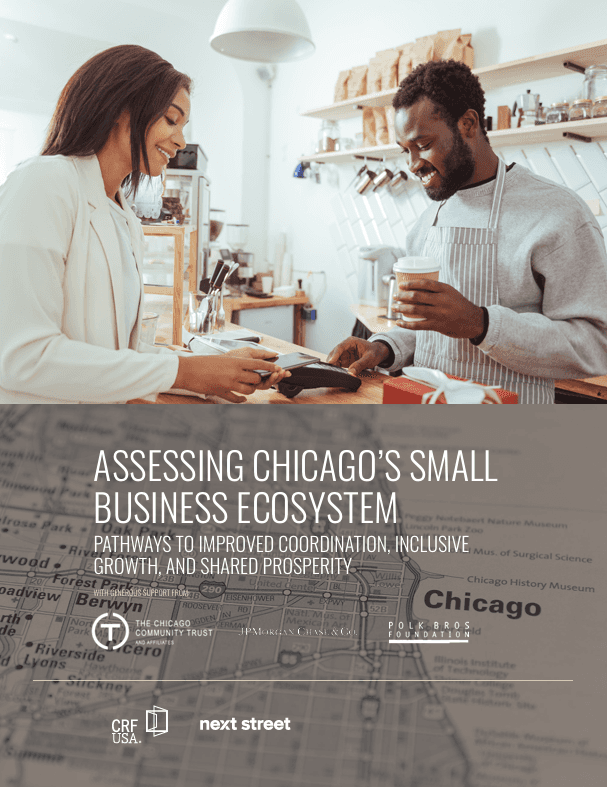
Pathways to Improved Coordination, Inclusive Growth, and Shared Prosperity
Research Report by Next Street and Community Reinvestment Fund, USA, with support from The Chicago Community Trust, JPMorgan Chase, and Polk Bros. Foundation
Executive Summary
Chicago has long been recognized as one of America’s leading centers of industry, commerce, entrepreneurship, and innovation. From manufacturing and logistics to professional services and technology, the city benefits from a strong economic foundation supported by a diverse workforce, robust infrastructure, and a growing entrepreneurial ecosystem.
Yet despite this economic strength, the benefits of Chicago’s small business economy have not been shared equally across communities. Significant disparities persist in business ownership, access to capital, business performance, and economic opportunity — particularly for women entrepreneurs and entrepreneurs of color on Chicago’s South and West Sides.
To better understand these inequities and identify opportunities for ecosystem improvement, Next Street partnered with:
The resulting report outlines key barriers facing women- and minority-owned businesses and proposes strategies to improve ecosystem coordination, expand equitable access to capital and services, and strengthen inclusive economic growth across Chicago.
Key Takeaways
1. Chicago’s Small Business Economy Is Growing — But Opportunity Is Unequal
Chicago has a strong entrepreneurial ecosystem, yet women- and minority-owned businesses continue to face major disparities in business ownership, revenue growth, access to capital, and economic opportunity.
2. Access to Capital Remains a Major Barrier
The report identified significant financing gaps for entrepreneurs of color, particularly in the $50,000–$250,000 range. Many businesses rely heavily on personal savings and friends-and-family funding due to limited access to traditional financing.
3. Chicago’s Business Support Ecosystem Is Fragmented
Despite a large network of business service organizations and capital providers, entrepreneurs often struggle to navigate available resources due to limited coordination, inconsistent messaging, and lack of centralized support systems.
4. Entrepreneurs of Color Remain Highly Optimistic About Growth
Businesses owned by people of color reported strong optimism around revenue growth, hiring, and expansion opportunities despite systemic barriers and lower access to resources.
5. Inclusive Growth Requires Better Ecosystem Coordination
The report highlights the need for more connected ecosystem strategies, flexible capital solutions, stronger entrepreneur networks, and industry-specific support to help small businesses scale and thrive.
Strategic Priorities Identified
The report outlines several key ecosystem priorities to improve coordination, inclusion, and long-term economic mobility across Chicago’s SMB landscape.
Expand Access to Flexible Capital: Develop financing products better aligned to the needs of startup and growth-stage entrepreneurs.
Improve Ecosystem Coordination: Strengthen collaboration across capital providers, business support organizations, philanthropy, and civic leaders.
Deliver More Tailored Business Support: Move beyond generalized programming toward stage-specific and industry-specific services.
Strengthen Entrepreneur Networks and Trust: Increase mentorship, relationship-building, and trusted pathways into ecosystem resources.
Support Inclusive Economic Growth: Build stronger pathways for women- and minority-owned businesses to access contracts, customers, capital, and growth opportunities.
Download the Full Report
Explore the full report for deeper insights into Chicago’s small business ecosystem, including barriers facing women- and minority-owned businesses, capital and coordination gaps, industry-specific opportunities, and strategies to support more inclusive economic growth across the city.